
Sacromesh
Implant for promontory fixation
Polypropylene prosthesis for the management of prolapse by sacral promontory fixation
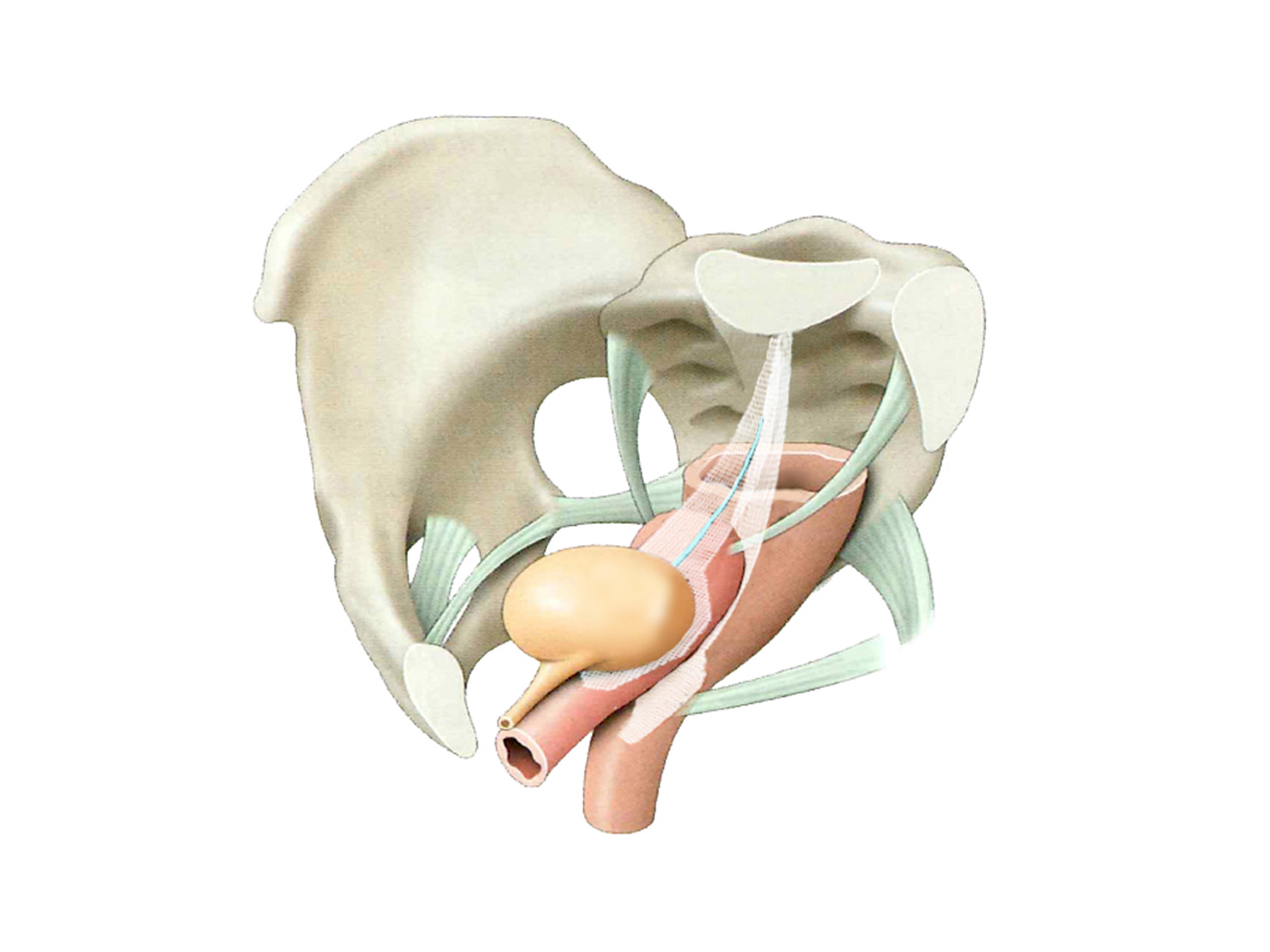
Sacromesh® is a prosthetic reinforcement implant specifically designed for abdominal sacrocolpopexy in the treatment of genital prolapse. It supports surgeons in managing anterior and apical prolapse, with or without associated posterior prolapse (rectocele), by providing support to the vaginal apex while preserving pelvic anatomy as much as possible.

Clinical benefits
For the surgeon:
- Implant dedicated to sacral promontory fixation: geometry designed with an offset shape to facilitate passage under the right ovarian horn.
- Intraoperative time savings thanks to the pre-cut format and immediate implant identification.
- Precise adjustment via two separate implants allowing independent tensioning of the anterior and posterior compartments.
- Flexible use: knit compatible with all fixation methods, adaptable to open and laparoscopic approaches.
For the patient:
- Optimized comfort: flexible knit, lightweight macroporous polypropylene promoting good tissue integration and a reduced foreign-body sensation.
- Minimally invasive surgery possible, particularly laparoscopic, with the expected benefits in terms of postoperative pain, recovery, and scar aesthetics (depending on the technique chosen).
- Targeted anatomical support of the anterior, apical and, if necessary, posterior compartments, helping restore pelvic statics and improve prolapse-related symptoms.
Material, stability & implant design
Sacromesh® implants are sterile devices made of knitted macroporous polypropylene monofilaments. This flexible, comfortable knit is designed to promote tissue integration, limit local inflammatory reaction, and offer a balance between lightness, mechanical strength, and long-term stability.
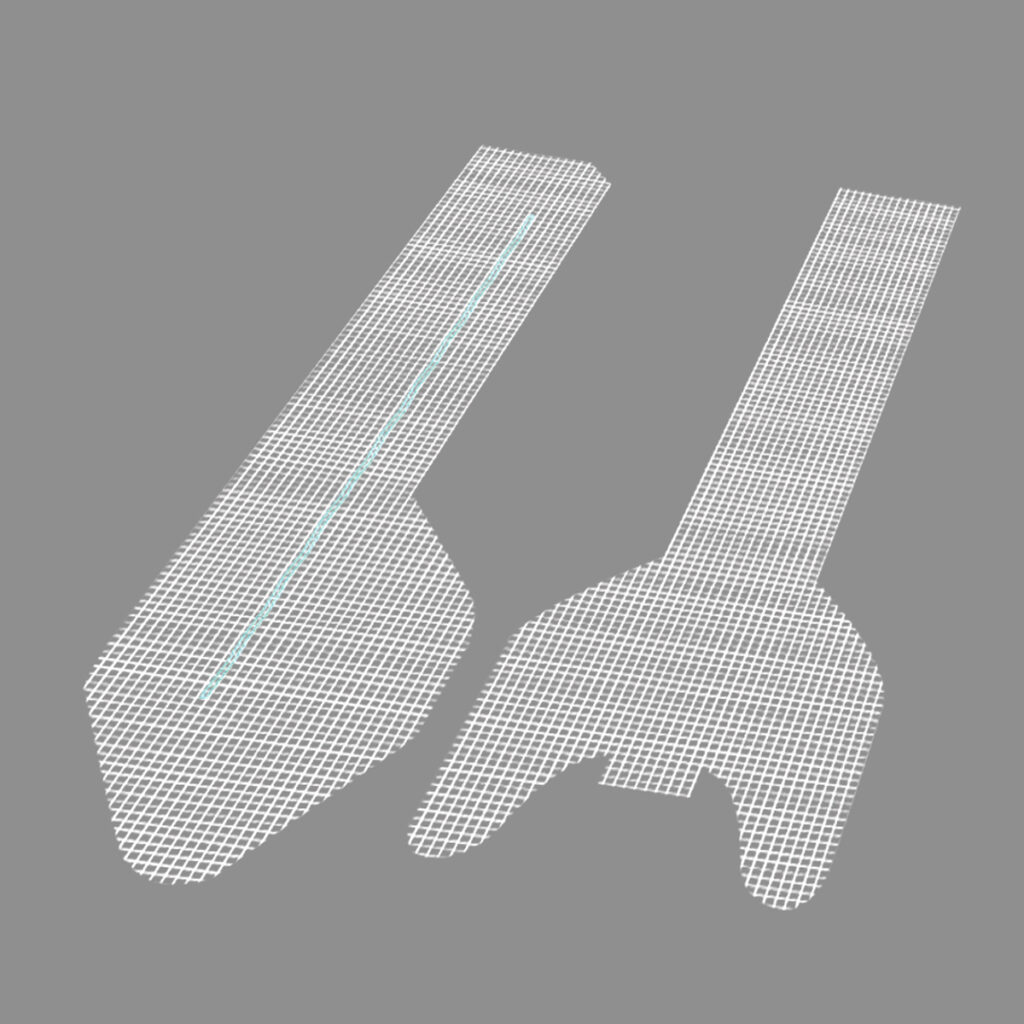
Sacromesh® consists of two distinct meshes:
- an anterior mesh, in a “spoon” shape,
- a posterior mesh, in a “fork” shape.
The offset shape of the anterior implant is specifically designed to pass under the right ovarian horn, thereby respecting pelvic anatomical landmarks and facilitating placement in this area.
The textile’s controlled, oriented elasticity accommodates the functional stresses of the pelvic floor, providing effective support while limiting over-tension. The polypropylene used is lightweight, contributing to improved tissue comfort and a reduced foreign-body sensation for the patient.
Indications & surgical techniques
The medical indications for Sacromesh® are those of abdominal sacral promontory fixation in the treatment of:
- anterior prolapse,
- apical prolapse (vaginal vault or uterus),
- apical prolapse with or without associated posterior prolapse (rectocele).
The implants are designed to serve as reinforcement and support for tissues during sacral promontory fixation according to the surgeon’s technical choices. Sacromesh® can be used in open surgery as well as laparoscopic surgery, and can be integrated into minimally invasive procedures, including robot-assisted approaches if the operative strategy provides for it.
The device is intended for surgeons trained in genital prolapse surgery and the use of pelvic prosthetic implants. The choice of technique (dissection pathways, management of anterior and posterior planes, peritoneal closure methods) remains at the surgeon’s discretion, in accordance with good practice recommendations and the instructions for use.
Use, cutting & fixation
Sacromesh® is a pre-cut implant supplied as two separate meshes (anterior and posterior) for sacral promontory fixation. This configuration allows adjustment by separate tensioning of the two implants:
- fine adjustment of anterior support,
- independent adjustment of posterior support,
depending on the patient’s morphology and the degree of prolapse in each compartment.
If additional adaptation is required, trimming must be performed with sterile scissors, following the manufacturer’s recommendations to preserve the integrity of the knit, macroporosity, and edge stability.
Sacromesh® is compatible with all fixation methods commonly used in sacrocolpopexy:
- sutures (absorbable or non-absorbable threads depending on practice),
- staples or tackers,
- other fixation systems validated by the surgeon.
Fixation points are chosen to ensure stable anchoring to the promontory and harmonious support of the anterior and/or posterior compartments, while avoiding at-risk vasculonervous and visceral structures. The applied tension must reproduce physiological support without overcorrection, to limit the risk of pain, sexual dysfunction, or functional disorders.
Clinical data
Sacromesh® has a structured clinical database combining dedicated studies and real-world data.
The ambispective SCUPP study included 290 patients with a mean follow-up of 5.9 ± 2.7 years. It documents the durability of anatomical correction, changes in functional symptoms, and the tolerability profile (recurrences, mesh exposures, pelvic pain, reoperations). The final SCUPP report is a key element of Sacromesh®’s mid-term clinical evaluation.
In addition, the ongoing EPI DATAMESH-POP study relies on data from the VIGIMESH registry, matched with SNDS data, to analyze the use of pelvic reinforcement implants, including Sacromesh®, under real-world conditions. This registry-based approach strengthens post-market surveillance, helps refine the safety profile, and contributes to regular updates of the benefit/risk report in the management of anterior, apical, and posterior prolapse (rectocele) by sacral promontory fixation. [1–2]
[1] Ambispective SCUPP clinical study, final report on 290 patients, 5.9 ± 2.7 years of follow-up
[2] EPI DATAMESH-POP ongoing (data from the VIGIMESH registry matched with SNDS data)
Technical characteristics
- Material: non-absorbable polypropylene (PP) monofilament implant
- Weight: approx. 39 ± 3 g/m² (lightweight polypropylene)
- Design: macroporous knitted implant, flexible and comfortable, with controlled, oriented elasticity, consisting of two distinct meshes (spoon-shaped anterior mesh, fork-shaped posterior mesh), with an offset anterior shape for passage under the right ovarian horn
- Application: tissue reinforcement and support during surgical treatment of genital prolapse by sacral promontory fixation (anterior prolapse, apical prolapse, with or without associated posterior prolapse – rectocele), in open or laparoscopic surgery.
- Sizes:
- posterior mesh: 6.4 x 19 cm
- anterior mesh: 5.4 x 19.3 cm
Resources
These resources are reserved for registered healthcare professionals and related professionals on our site.
Peritoneal inclusion cyst presenting as a rectocele after sacrohysteropexy: A case report
Learn more
For more information, to receive samples, or to distribute this product, please do not hesitate to contact us!
Contact us!
Sacromesh is a Class III medical device manufactured by COUSIN BIOTECH S.A.S. CE conformity was assessed by the notified body DQS MED (CE0297). COUSIN BIOTECH S.A.S’s management system is certified as compliant with ISO 13485 (2016).
Recommendations for use: Carefully read the labeling, instructions for use, and surgical technique before any intervention.